
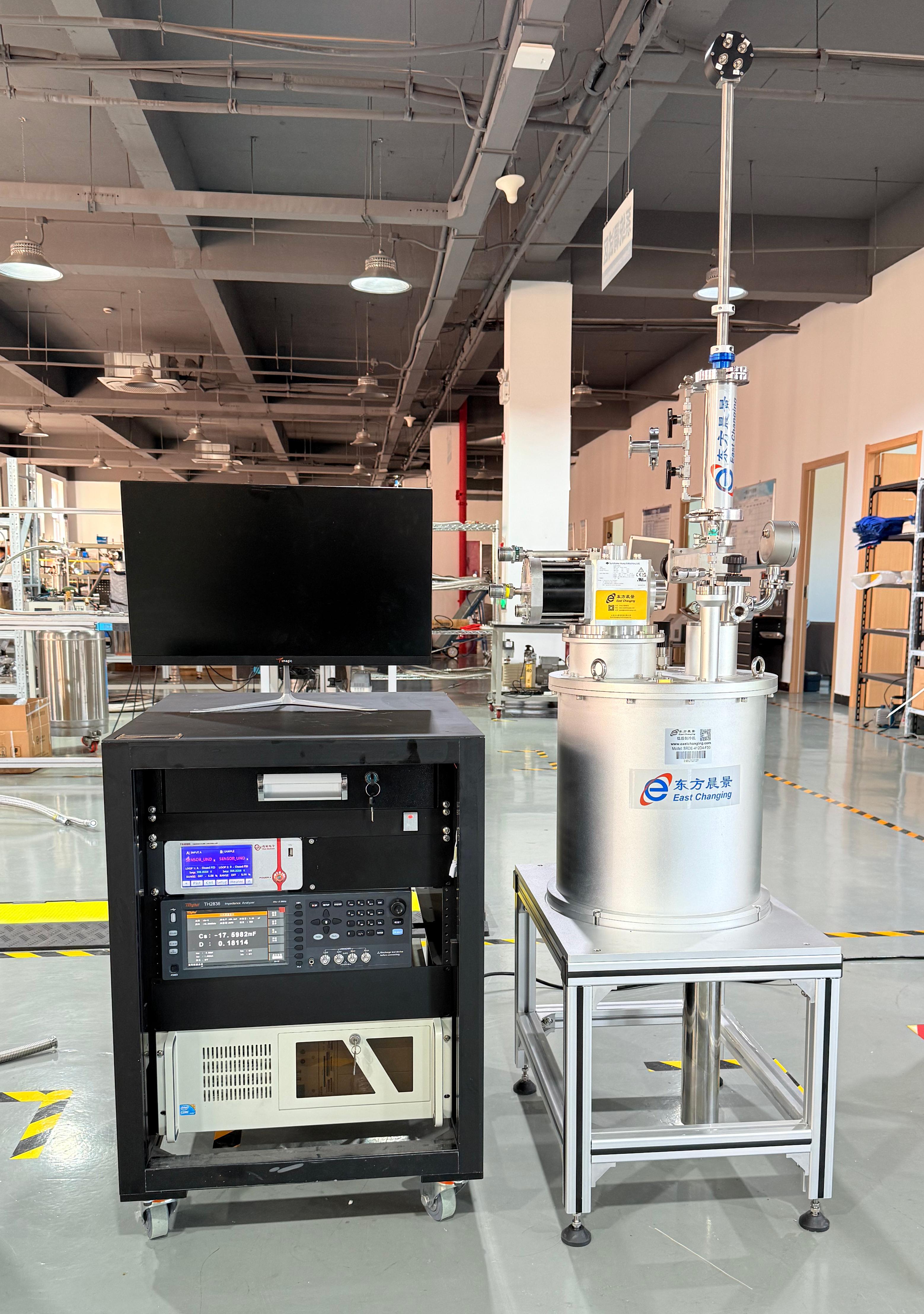
Define Temperature and Magnetic Field Requirements
Confirm the base temperature, temperature range and required stability. Also define the magnetic field range, orientation and whether the field must be swept while the sample is at low temperature.
Cryogenic Environment and Sample Space
The cryostat type affects sample access, vibration level and cooldown time. Closed-cycle cryostats eliminate liquid helium consumption but introduce more vibration than liquid helium systems.
Sample Holder and Positioning
The sample holder must provide thermal anchoring, electrical isolation and mechanical stability. Consider whether the sample needs rotation, translation or optical access during measurement.
Wiring, Thermal Anchoring and Instrument Interfaces
Signal wires must be heat-sunk at intermediate stages to reduce thermal load on the sample. Low-noise cabling and grounding practices are critical for sensitive transport or magnetization measurements.
Measurement Integration and System Compatibility
Confirm how the magnet, cryostat and measurement electronics will be synchronized. Common integrations include lock-in amplifiers, source meters, temperature controllers and data acquisition software.
Information to Prepare Before Inquiry
Provide the target temperature, field range, sample size, wiring count, measurement method and any existing instruments. This information determines the cryostat, magnet and electronics configuration.