
Magnet Power Supplies for Stable Current and Field Control
Drive magnet loads with controlled current output, sweep behavior, protection logic and communication interfaces for magnetic-field systems.
Designed for projects where current stability, ripple, load matching and control response affect field quality and measurement repeatability.
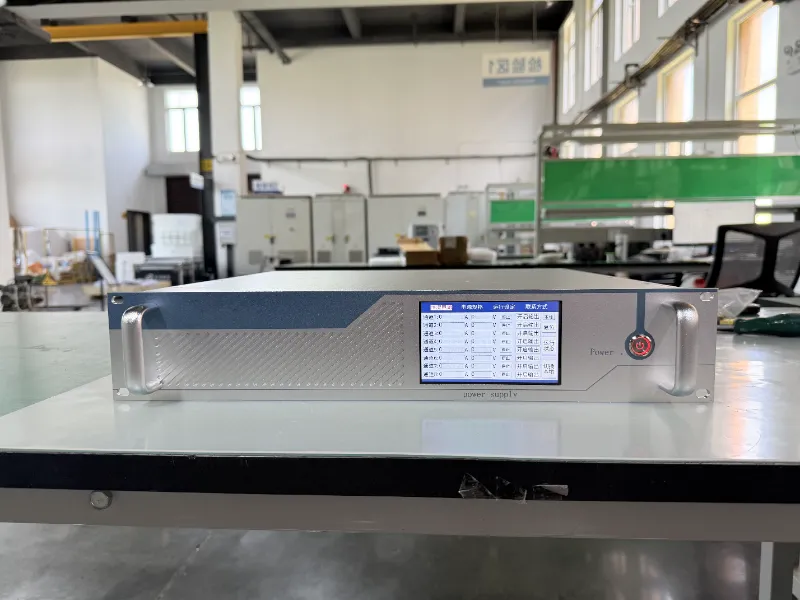
Stable current output
range, ripple, resolution
Magnet load matching
resistance, inductance, voltage
Sweep and protection
control, interlock, shutdown
Current quality
Confirm current range, stability, ripple and resolution according to the required field behavior.
Load compatibility
Match voltage compliance, magnet resistance, inductance, cooling limits and operating duty cycle.
Control and safety
Support sweep profiles, communication interfaces, protection logic and project-specific interlocks.
Start with the magnet load, current range, voltage compliance and sweep requirement.
Confirm the Conditions Behind a Magnet Power Supply
A magnet power supply should be selected by magnet load, current quality, voltage compliance, sweep behavior and protection requirements.
Selection logic
Field stability and repeatability depend on how well the power supply is matched to the magnet load and control sequence.
Current range
Confirm: maximum current, operating current, polarity and current resolution
Why: Current range defines available magnetic-field output and operating margin.
Voltage compliance
Confirm: required voltage, cable drop, inductive response and operating headroom
Why: Insufficient voltage can limit current rise, sweep speed and stable operation.
Magnet load
Confirm: magnet resistance, inductance, coil type, cooling and cable length
Why: The power supply must be matched to the actual magnet load, not only rated current.
Current stability
Confirm: stability target, drift tolerance, operating time and temperature condition
Why: Current stability affects field stability, measurement repeatability and data quality.
Ripple and noise
Confirm: ripple limit, noise sensitivity and measurement electronics requirements
Why: Ripple can appear as field fluctuation and may disturb sensitive measurements.
Sweep mode
Confirm: manual control, programmed sweep, ramp rate, reversal and cycling
Why: Sweep behavior affects heat load, protection timing and data synchronization.
Protection logic
Confirm: overcurrent, overvoltage, overtemperature, interlock and shutdown needs
Why: Protection must match the magnet, cooling system and operator workflow.
Control interface
Confirm: local panel, analog input, software control, communication and trigger needs
Why: The interface determines how the power supply connects to the experiment.
Send the known magnet load, current range, voltage compliance and sweep mode first.
Match the Power Supply Modules to the Magnet Load
A magnet power supply system combines power output, current regulation, load matching, sweep control, protection and communication into one field-control chain.
Power stage
current range, voltage compliance, output capacity
Current regulation
stability, ripple, resolution, drift control
Load matching
resistance, inductance, cables, cooling limits
Sweep control
ramp rate, reversal, cycling, sequence
Protection logic
overcurrent, interlock, shutdown
Communication interface
local panel, software, analog, trigger
Start from magnet load
Review resistance, inductance and cooling limits.
Set current target
Define range, polarity, stability and ripple needs.
Plan sweep behavior
Match ramp rate, cycling and protection timing.
Connect control path
Confirm interface, software and interlock signals.
A magnet power supply should be configured as part of the magnetic-field control chain.
Choose the Power Supply Configuration That Matches the Magnet Load
Different magnet power supply configurations support different current ranges, polarity modes, sweep requirements, load types and control workflows.
DC Magnet Power Supply
For stable one-direction current output where the magnetic field is held at a fixed level or adjusted slowly.
Used for: steady field operation, basic electromagnet systems and fixed-field testing
Bipolar Magnet Power Supply
For positive and negative field operation, field reversal, hysteresis loops and direction-dependent test sequences.
Used for: magnetization studies, coercivity checks and reversible field control
Programmable Sweep Power Supply
For controlled ramp rates, automated field sweeps, cycling routines and experiment-linked data acquisition.
Used for: Hall, MR, transport tests and repeatable field-dependent measurements
High-Current Magnet Power Supply
For large electromagnets or low-resistance coils that require higher output current and careful thermal management.
Used for: water-cooled magnets, high-current coils and industrial magnetic test setups
Multi-Channel Power Supply Configuration
For multi-axis magnetic-field systems where several current channels must be coordinated, synchronized or controlled by software.
Used for: vector magnetic fields, multi-axis coils and coordinated field-control workflows
Configuration is not only rated current.
The right power supply path depends on magnet load, voltage compliance, ripple tolerance, sweep behavior, protection logic and the required control interface.
Confirm before selecting
If the configuration is uncertain, start from the magnet load and required field-control behavior.
Engineering Checks for Magnet Power Supply Projects
Testing should confirm how the power supply behaves with the actual magnet load, control sequence, protection logic and communication interface.
Magnet power supply test flow
Project conditions define which electrical and control behaviors should be checked.
Load
resistance, inductance
Current
range, stability
Ripple
noise, drift
Sweep
ramp, reversal
Protection
interlock, shutdown
Load matching review
Covers: magnet resistance, inductance, cable length and voltage compliance
Record: load review / voltage headroom note
Current stability test
Covers: current range, setpoint accuracy, drift and operating time
Record: current stability note / output test record
Ripple and noise check
Covers: ripple, noise sensitivity, grounding and electronics impact
Record: ripple check / measurement condition note
Sweep and reversal test
Covers: ramp rate, field reversal, cycling mode and command response
Record: sweep test / command response note
Protection and interlock test
Covers: overcurrent, overvoltage, overtemperature and cooling interlock
Record: protection checklist / alarm response note
Control interface review
Covers: front panel, analog input, software communication and trigger
Record: interface check / communication note
Send the magnet load, current target, sweep mode and interface requirement before final testing is defined.
Send Your Magnet Power Supply Requirement
Share the magnet load, current range, voltage compliance, sweep mode and interface requirement so the power supply can be reviewed as part of the magnetic-field system.
Start with known conditions.
A useful inquiry does not need to be complete, but it should identify the magnet load, current target and control behavior clearly enough for engineering review.
Minimum starting point
Magnet load, target current, polarity or sweep mode, cooling condition and control interface.
What to send first
After submission
Engineering review
Check the supply against magnet load, current quality and protection needs.
Configuration direction
Clarify DC, bipolar, sweep, high-current or multi-channel supply path.
Next discussion
Review missing values before quotation, detailed design or test planning.
Ready to review a magnet power supply for your field-control system?